Date: April 07, 2024
TrueDepth camera technology powered AR lenses are more realistic than ever
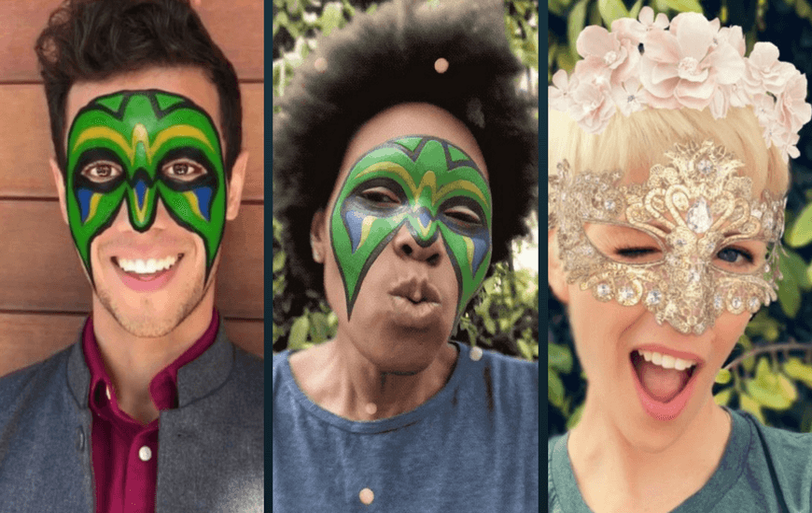
Out of the blue, Snapchat started actualizing Apple's TrueDepth camera technology in its Lenses selfie highlight. The iPhone X users who utilize Snapchat will see AR masks fly up in the application that makes utilization of Apple's advanced facial mapping technology to superimpose the mask onto the client's face all the more reason and track movement all the more precisely.
Apple's TrueDepth innovation for the iPhone X selfie camera ventures 30,000 infrared dots on users face. It controls the gadget's safe facial recognition system and makes it conceivable to transform your facial appearances into Animojis.

Snapchat says TrueDepth permits even the smallest points of interest and 3D objects in the lenses to take after your face's developments, influencing masks to look more reasonable than they normally are. The 3D items can likewise reflect and respond to encompassing lighting, creating shadows and features that follow the shapes of your face and the environment. At last, Apple's innovation gives the Lenses more precise depth recognition, which prompts better foundation obscures.
iPhone’s AR lenses reflect the encompassing light even more. TrueDepth camera likewise can blur the background and precisely apply little subtle details and 3D Objects.

However, developers do have access to the map of user’s face Truedepth camera and data of up to 50 facial expressions to tell a developer how you raise your eyebrows or move your mouth.
As per the agreement, third-party application developers can just access to visual facial mapping information, not the numerical portrayal of it that is utilized to open the iPhone X through Face ID. Apple additionally uncovered that even its own particular representatives can't access the new feature. However, the map of user’s face Truedepth camera and information of up to 50 face details can be accessed by developers.
Apple guaranteed that this information can never be utilized for publicizing or promoting and that it can't be packaged and sold to organizations like Cambridge Analytica.
Furthermore, Apple has banned developers from making profiles of generally unknown clients by utilizing recognizing facial catch data. It implies Snap can't store data about the expressions you make with AR lenses.
By Arpit Dubey
Arpit is a dreamer, wanderer, and tech nerd who loves to jot down tech musings and updates. With a knack for crafting compelling narratives, Arpit has a sharp specialization in everything: from Predictive Analytics to Game Development, along with artificial intelligence (AI), Cloud Computing, IoT, and let’s not forget SaaS, healthcare, and more. Arpit crafts content that’s as strategic as it is compelling. With a Logician's mind, he is always chasing sunrises and tech advancements while secretly preparing for the robot uprising.
OpenAI Is Building an Audio-First AI Model And It Wants to Put It in Your Pocket
New real-time audio model targeted for Q1 2026 alongside consumer device ambitions.
Nvidia in Advanced Talks to Acquire Israel's AI21 Labs for Up to $3 Billion
Deal would mark chipmaker's fourth major Israeli acquisition and signal shifting dynamics in enterprise AI.
Nvidia Finalizes $5 Billion Stake in Intel after FTC approval
The deal marks a significant lifeline for Intel and signals a new era of collaboration between two of America's most powerful chipmakers.
Manus Changed How AI Agents Work. Now It's Coming to 3 Billion Meta Users
The social media giant's purchase of the Singapore-based firm marks its third-largest acquisition ever, as the race for AI dominance intensifies.