Date: December 16, 2024
Google betters its natural language understanding
Google has come up with a new application that allows users to interact with an AI-based language processing system. Such activities by Google demonstrate AIs' ability to understand how we speak. This particular innovation will let the user search for any intended answers in books by AI’s word association skills.
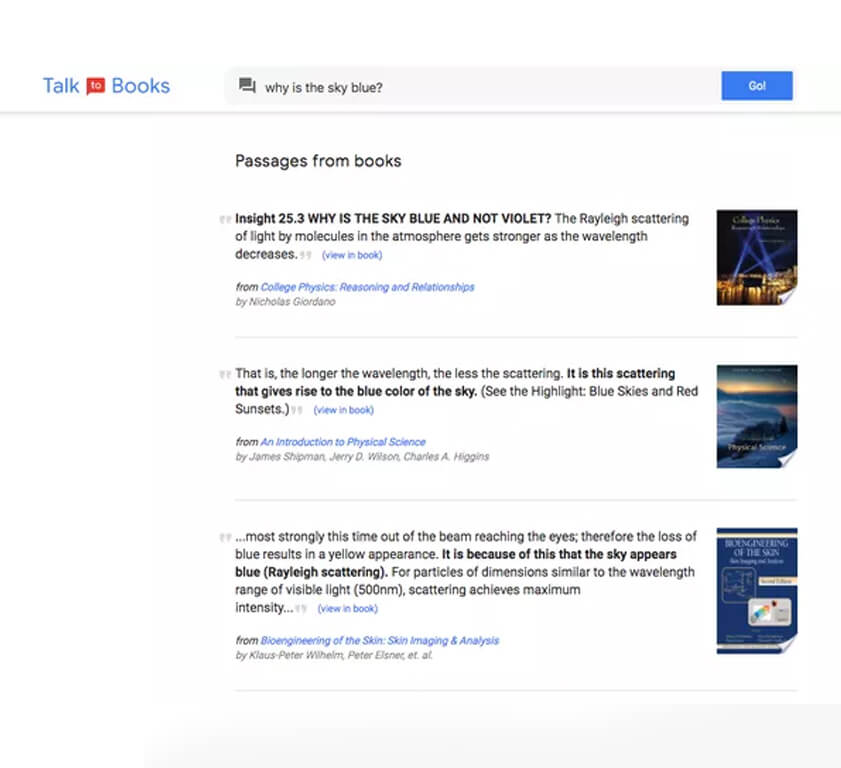
Google’s Research experiment included "Talk to Books" and “Semantris.”
Talk to Books let the user creep through Google's tremendous database of books that are been digitized throughout the years by Google. In any case, rather than scanning for words or phrases, users will now have the capacity to make inquiries to find significant solutions.
However, Google cautions that the experiment 'works at the sentence level as opposed to the paragraph level', which is the reason, clients may locate some startling and outside of any relevant connection to the issue at handbooks and entries.

As per Google, its AI-based calculation will filter through every single accessible asset in its database to discover
“sentences in books that respond, with no dependence on keyword matching. In case if the user is interacting with the books, getting responses that can help the user to determine if he is interested in reading them or not”.
It further added,
“no predefined rules bounding the relationship between what you put in and the results you get”.
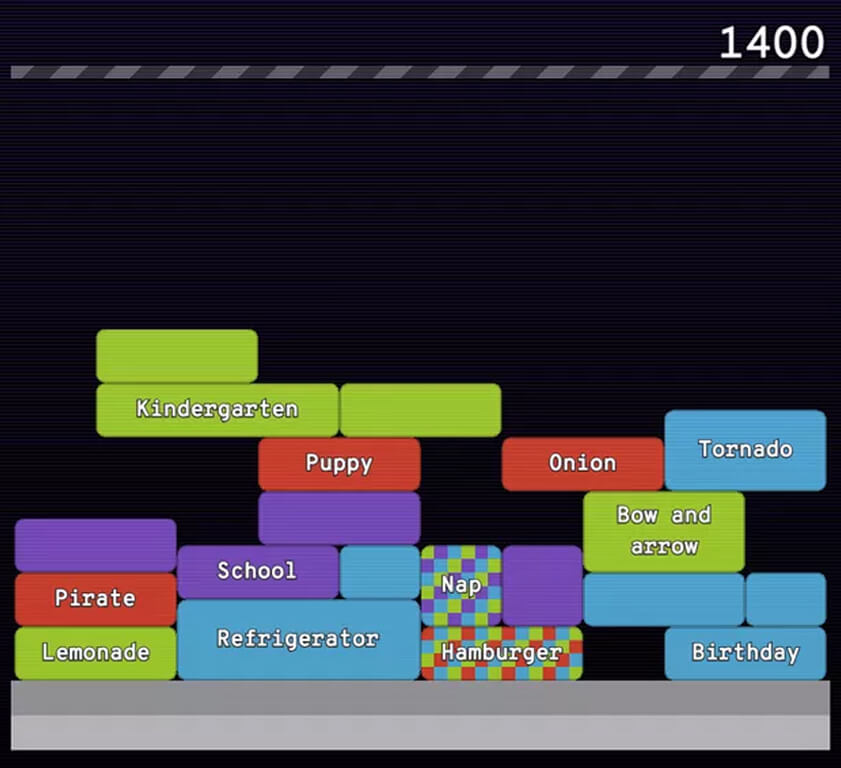
The second examination is word-affiliation diversion Semantris, which affiliates aptitudes against the AI programming. The diversion positions the words on-screen and directly relates to how well the search is associated with your answers.
For instance, if the amusement gives you a word like 'building' and your input 'house', it will focus in view of how well it supposes the semantic relationship is amongst 'construction' and 'house'. So, that’s how it goes.

It's important that there are two categories of diversion. One is an Arcade form that requires the players to be extremely quick, and henceforth reactions should be restricted to single words generally.
In any case, there's additionally a Blocks form that has no time weight, which urges clients to experiment with longer phrases and sentences rather than single words.
By Arpit Dubey
Arpit is a dreamer, wanderer, and tech nerd who loves to jot down tech musings and updates. With a knack for crafting compelling narratives, Arpit has a sharp specialization in everything: from Predictive Analytics to Game Development, along with artificial intelligence (AI), Cloud Computing, IoT, and let’s not forget SaaS, healthcare, and more. Arpit crafts content that’s as strategic as it is compelling. With a Logician's mind, he is always chasing sunrises and tech advancements while secretly preparing for the robot uprising.
Pinterest Follows Amazon in Layoffs Trend, Shares Fall by 9%
AI-driven restructuring fuels Pinterest layoffs, mirroring Amazon’s strategy, as investors react sharply and question short-term growth and advertising momentum.
Clawdbot Rebrands to "Moltbot" After Anthropic Trademark Pressure: The Viral AI Agent That’s Selling Mac Minis
Clawdbot is now Moltbot. The open-source AI agent was renamed after Anthropic cited trademark concerns regarding its similarity to their Claude models.
Amazon Bungles 'Project Dawn' Layoff Launch With Premature Internal Email Leak
"Project Dawn" leaks trigger widespread panic as an accidental email leaves thousands of Amazon employees bracing for a corporate cull.
OpenAI Launches Prism, an AI-Native Workspace to Shake Up Scientific Research
Prism transforms the scientific workflow by automating LaTeX, citing literature, and turning raw research into publication-ready papers with GPT-5.2 precision.