Date: November 29, 2024
Morse code will help the people with disability.
In a new move, the tech giant is preparing to release the ‘Morse Code’ on iOS and Android smartphones. Morse code is a way of communicating text information in a series of tones, lights, or clicks that can be understood by a skilled listener without any specialized equipment. It dates back to the 1800s, and let the user spell out words and communicate by using two buttons: a dot “.” and a dash “—.”
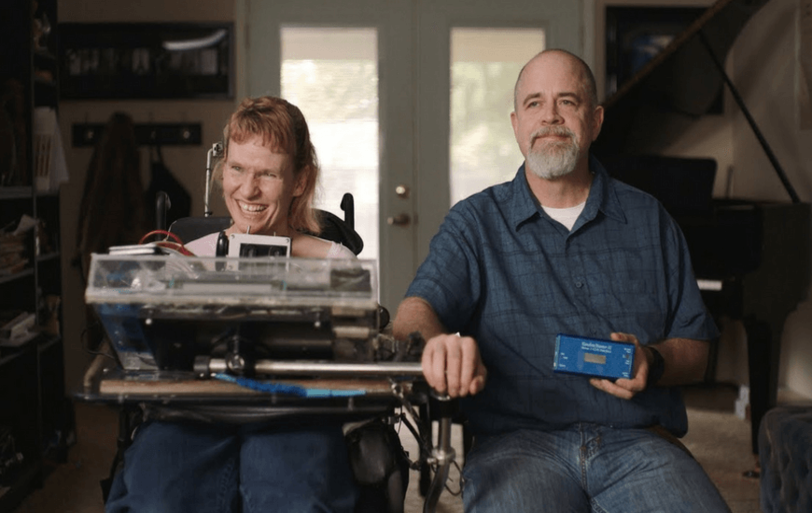
Google worked on this innovation with Tania Finlayson, an expert in Morse code assistive technology. Tania was born with cerebral palsy and was not able to communicate very effectively.
“Earlier this year, we partnered with developer Tania Finlayson, an expert in Morse code assistive technology, to make Morse code more accessible. Today, we’re rolling out Morse code on Gboard for iOS and improvements to Morse code on Gboard for Android.” Google said in a blog post. “To help you learn how to type in Morse code, we’ve created a game (on Android, iOS, and desktop) that can help you learn it in less than an hour.”
After taking note of her firm dedication and willpower, she was picked to participate in a study for non-verbal children at the University of Washington. The study was led by Al Ross, who wrote a grant funding of a Morse code communicator for disabled children.
Tania got enrolled in the program and soon realized the potential of the program. Later she said, “It (the device) would convert my Morse code into letters then speak out loud in English and had a small printer installed in it. I could activate a light to raise my hand in class.”
She further added, “School became fun, instead of exhausting. I could focus on my studies and have real conversations with my friends for the first time. Also, I did not need an adult figure with me every moment at school, and that was awesome.”
Later on, Google partnered with Tania on bringing Morse code to Gboard. It led them to design the keyboard layout, which added Morse sequences to the auto-suggestion strip above the keyboard, and developed settings that allow people to customize the keyboard to their unique needs.
The Morse code keyboard on Gboard allows people to use Morse code (dots and dashes) to enter text, instead of the regular (QWERTY) keyboard. Gboard for Android lets you hook external switches to the device, so a person with limited mobility could operate the device.
The new addition will surely help people with disabilities to communicate in a better way, and further, they can experience much of the things they might be missing in their earlier life.
By Arpit Dubey
Arpit is a dreamer, wanderer, and tech nerd who loves to jot down tech musings and updates. With a knack for crafting compelling narratives, Arpit has a sharp specialization in everything: from Predictive Analytics to Game Development, along with artificial intelligence (AI), Cloud Computing, IoT, and let’s not forget SaaS, healthcare, and more. Arpit crafts content that’s as strategic as it is compelling. With a Logician's mind, he is always chasing sunrises and tech advancements while secretly preparing for the robot uprising.
OpenAI Is Building an Audio-First AI Model And It Wants to Put It in Your Pocket
New real-time audio model targeted for Q1 2026 alongside consumer device ambitions.
Nvidia in Advanced Talks to Acquire Israel's AI21 Labs for Up to $3 Billion
Deal would mark chipmaker's fourth major Israeli acquisition and signal shifting dynamics in enterprise AI.
Nvidia Finalizes $5 Billion Stake in Intel after FTC approval
The deal marks a significant lifeline for Intel and signals a new era of collaboration between two of America's most powerful chipmakers.
Manus Changed How AI Agents Work. Now It's Coming to 3 Billion Meta Users
The social media giant's purchase of the Singapore-based firm marks its third-largest acquisition ever, as the race for AI dominance intensifies.