Date: March 04, 2024
The Ministry of Electronics and Information Technology (MeitY) has released an advisory for all AI developers; failure to comply will incur legal action.
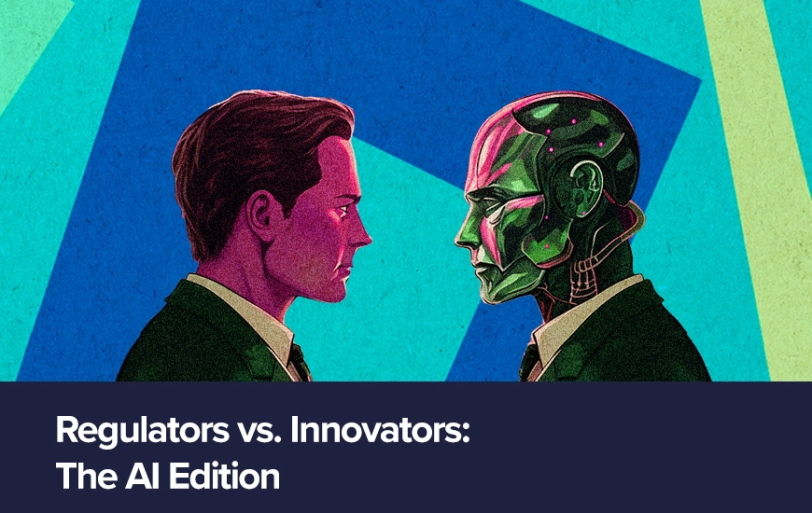
Who are we more afraid of? The technological marvels that AI creates or the humans who control it? Do we need proper regulations to control something that can make something that never existed before? Before we delve into an answer, let’s consider what Leonardo, a leading Italian Defence company, thinks about it.
In an interview with CNBC, Roberto Cingolani, Leonardo's CEO, highlighted humanity's history of conflict, "To be honest, what concerns me more is the lack of control from humans, who are still making wars after 2,000 years." Cingolani also looked down on the imagery of AI that the world has created, as he believes that even Generative AI is a tool created by humans, runs on machines made by humans, and controls tasks made for humans.
Amid the chaotic opinions surrounding AI, the latest regulations introduced by the Ministry of Electronics and Information Technology (MeitY) bring more backlash from the tech community. MeitY’s diktat mandates tech companies working on any artificial intelligence product to get a nod from government bodies before launching it for public access.
Tech experts and top legal professionals are pushing to remove this rule, as it will become a highly loss-making and unnecessary process to get every update in the AI world approved by the government authorities. This would restrict the companies from functioning smoothly and can cause unprecedented halts in business-client interactions.
Tech players will require labeling under-trial AI to seek approval and create extended labels like ‘under-testing’ or ‘unreliable’ before releasing them to the general public. The companies must also get explicit consent from users to provide access to their AI products.
With the government bodies regulating the developments in the AI sector, both positive and negative trends may follow. On one hand, the world may save itself from global incidents like Deepfake videos. On the other hand, the steep rise of AI companies would not remain as high anymore.
Going back to the question of who we should be more afraid of, the right answer for now would be - None. As users, we must reject innovations that the tech giants bring without proper backing. Even with the regulations, the black market still functions properly without retraces or actionable proof. The only people facilitating these innovations are the general public.
By Arpit Dubey
Arpit is a dreamer, wanderer, and tech nerd who loves to jot down tech musings and updates. With a knack for crafting compelling narratives, Arpit has a sharp specialization in everything: from Predictive Analytics to Game Development, along with artificial intelligence (AI), Cloud Computing, IoT, and let’s not forget SaaS, healthcare, and more. Arpit crafts content that’s as strategic as it is compelling. With a Logician's mind, he is always chasing sunrises and tech advancements while secretly preparing for the robot uprising.
OpenAI Is Building an Audio-First AI Model And It Wants to Put It in Your Pocket
New real-time audio model targeted for Q1 2026 alongside consumer device ambitions.
Nvidia in Advanced Talks to Acquire Israel's AI21 Labs for Up to $3 Billion
Deal would mark chipmaker's fourth major Israeli acquisition and signal shifting dynamics in enterprise AI.
Nvidia Finalizes $5 Billion Stake in Intel after FTC approval
The deal marks a significant lifeline for Intel and signals a new era of collaboration between two of America's most powerful chipmakers.
Manus Changed How AI Agents Work. Now It's Coming to 3 Billion Meta Users
The social media giant's purchase of the Singapore-based firm marks its third-largest acquisition ever, as the race for AI dominance intensifies.