
Lotus Flow Review: Small App, Bigger Appeal Than Expected…
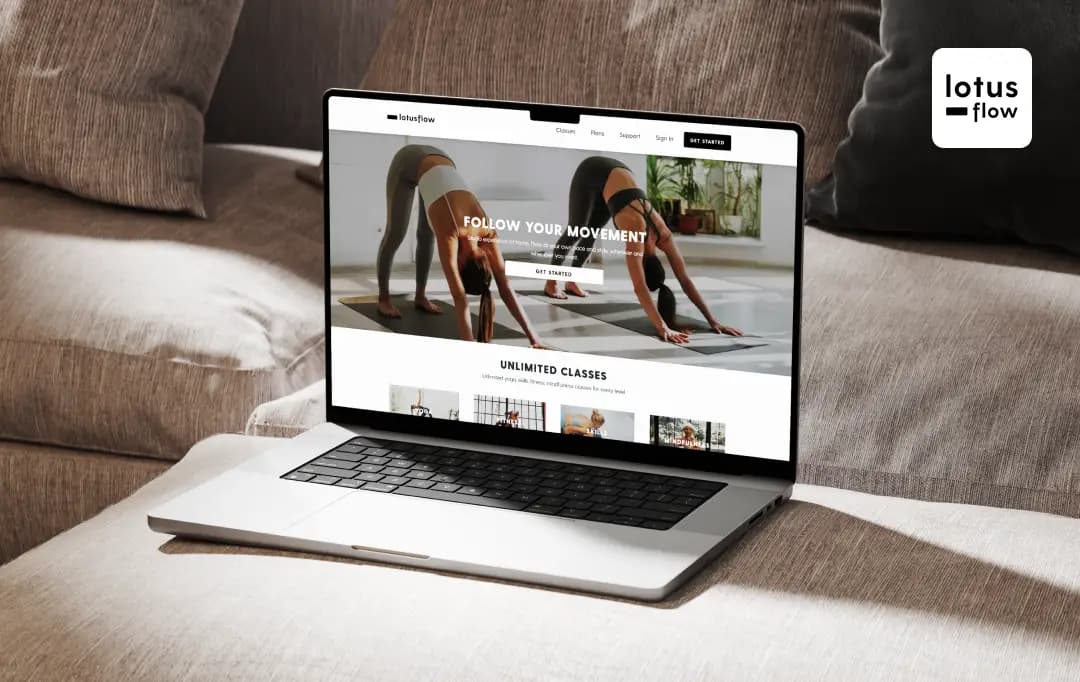
Most wellness apps lean on one thing, whether that's a pile of workout videos or a single discipline. Lotus Flow is different because it splits its library into four clear categories (yoga, fitness, skills, and mindfulness) and then adds gentler formats like chair yoga, wall Pilates, face yoga, and tai chi on top. I wanted to see whether that range helps you stay with a routine or just makes the app feel crowded.
I opened the Lotus Flow app and began with a 15-minute morning stretching class. It was easy to start: no equipment, no setup, and the instructor walked through each movement step by step.
What I noticed over the next few sessions was how naturally I moved between categories. A stretching class one morning, a beginner yoga class a couple of days later, and by the fourth session I was choosing classes without much thought.
This Lotus Flow review covers what I found after multiple sessions: how the classes feel in practice, how the programs are structured, and who gets the most out of it. If you're after a fitness app built around low-impact movement you can do from home, here's how it holds up.
Pros and Cons of Lotus Flow
Pros
- Yoga, Pilates, Wall Pilates, chair yoga, tai chi, and stretching in a single app
- Beginner-friendly, with classes that progress gradually
- Low-impact sessions that are easy on the joints
- Works at home with no equipment or gym
- Structured programs built around specific goals
- Large pose library with explanations and benefits
Cons
- Not built for high-intensity training or heavy strength work
- Experienced practitioners may want more advanced variety
Key Features of Lotus Flow
Lotus Flow differentiates itself from other yoga apps through is its breadth of features. Rather than one discipline done well, it covers several gentle ones, and the features below are what keep a routine from feeling repetitive.
1. Hundreds of guided classes (4.5/5)
The library spans yoga, Pilates, stretching, tai chi, and more. So, you can join a yoga class in the morning and a short mobility session at night from the same app. Plus, new content is added regularly.
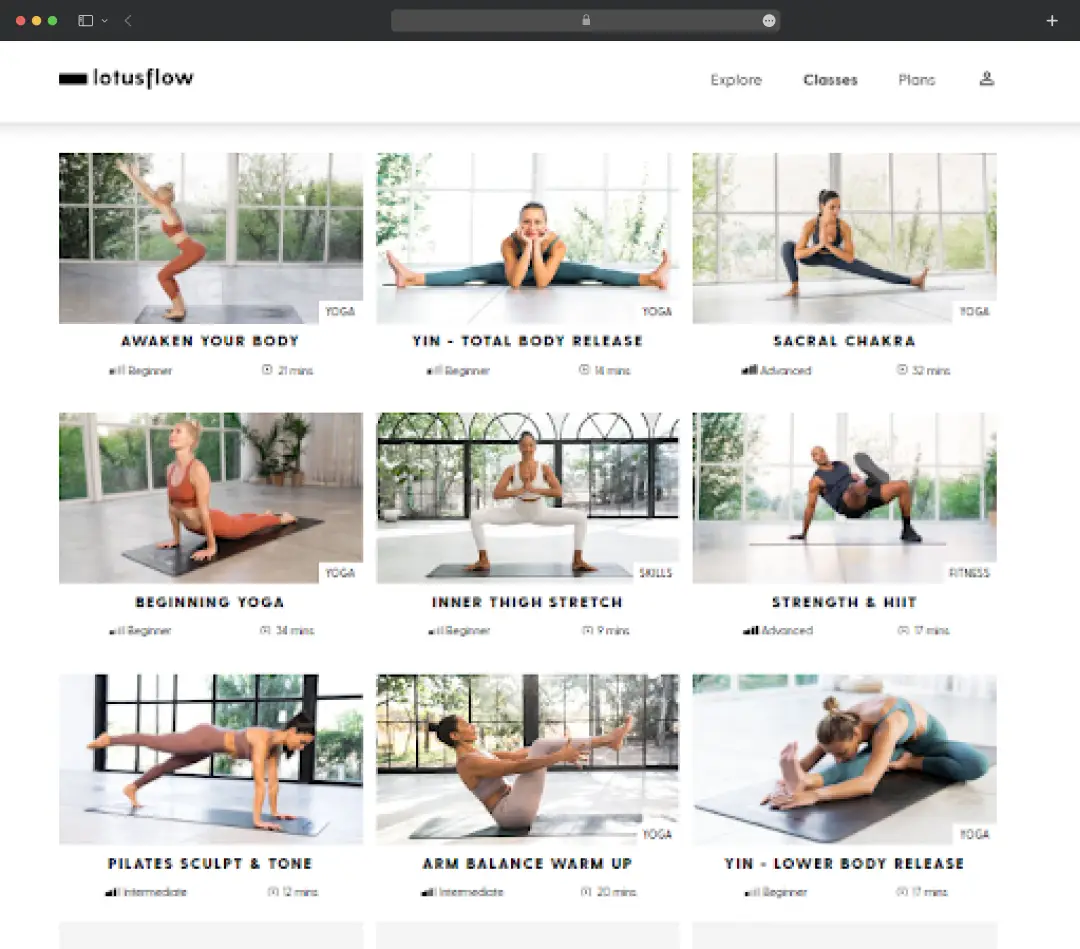
Classes vary in length and difficulty, which makes it easy to match a session to the time and energy you have that day. That variety also helps if you tend to get bored repeating the same routine.
2. Structured programs (4.2/5)
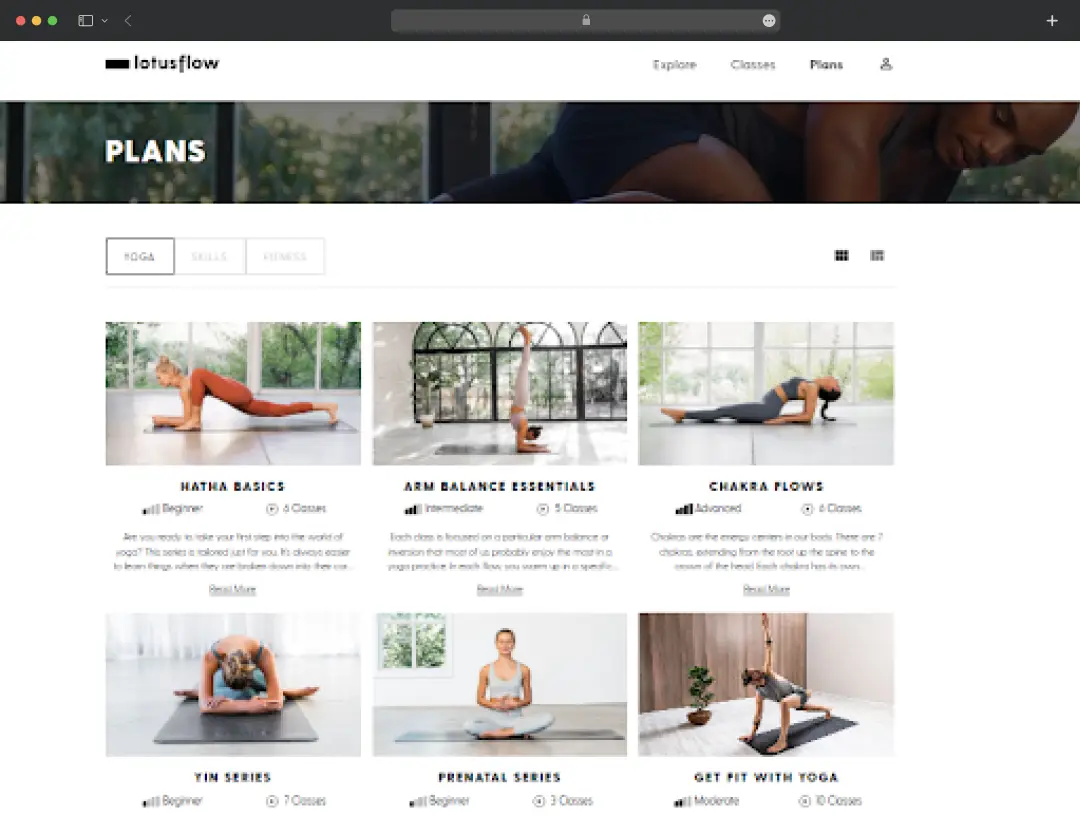
Lotus Flow programs are built around goals like flexibility, posture, or building a routine, so you aren't picking random videos each day. All the plans are designed to evolve with your progress.
Following one program from start to finish gives your practice a clear direction, which is especially useful if you've struggled to stay consistent with open-ended libraries. Each session builds on the last, so you can see where you're headed.
3. Gentle formats for everybody (4.2/5)
Chair yoga, Wall Pilates, face yoga, and tai chi are all included. It is still one of the more complete options for seated and low-impact practice.
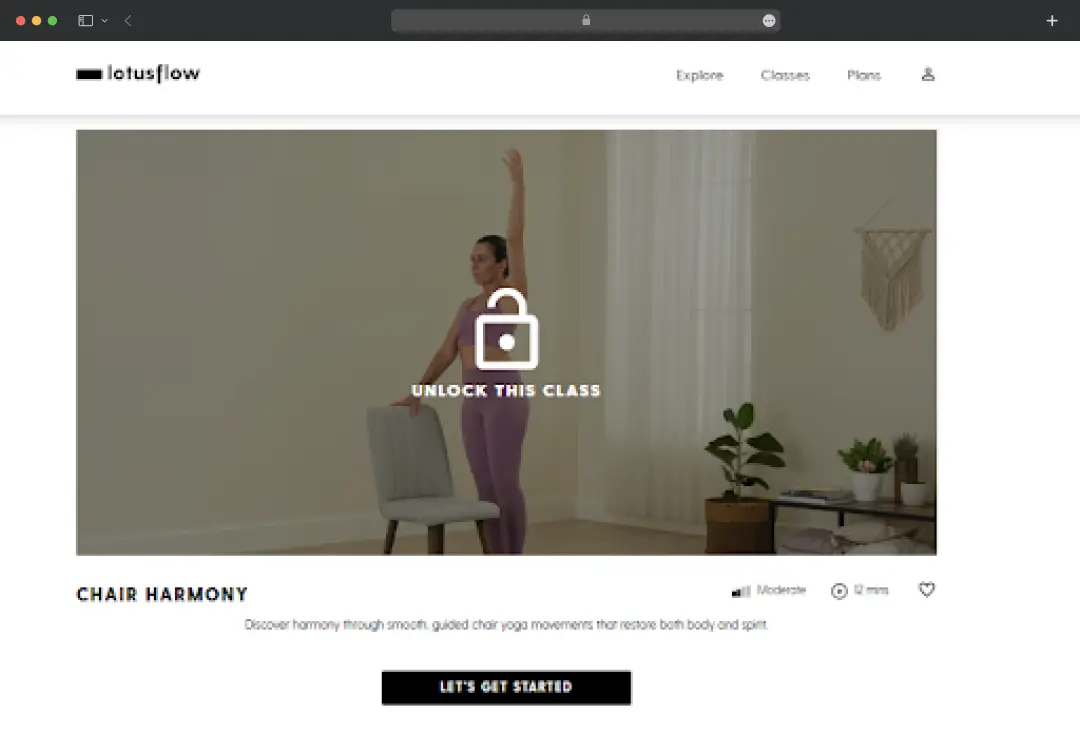
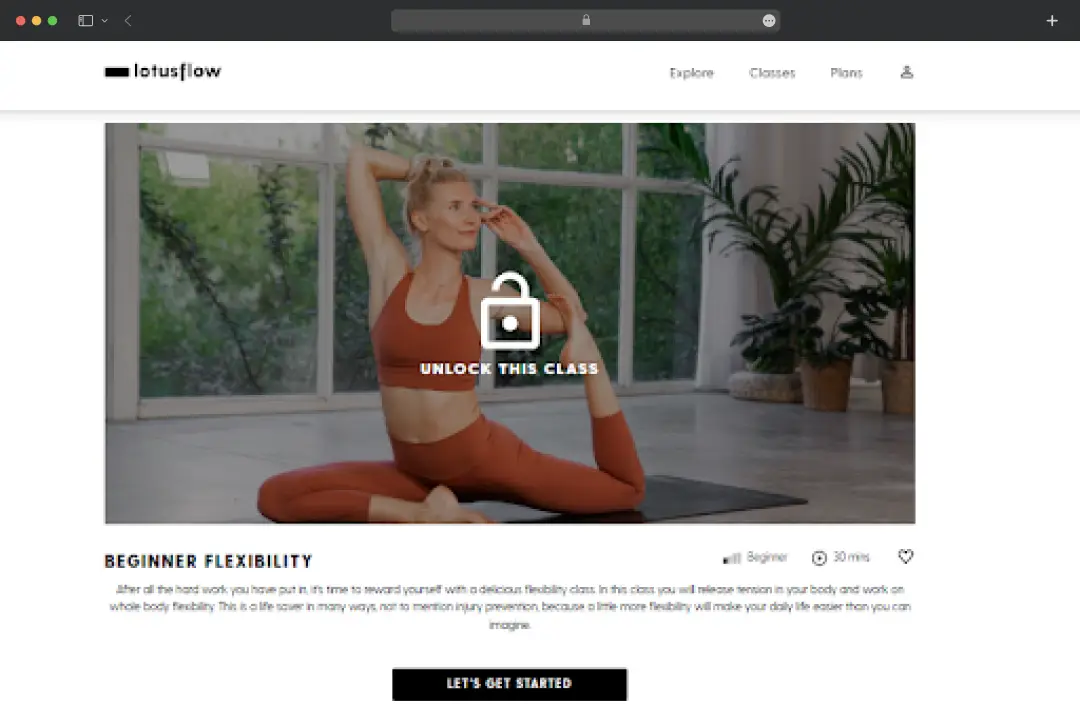
These formats keep movement approachable for people who want to avoid strain on the joints or simply prefer a slower pace. They also make it easier to practice in small spaces or at a desk.
Note: For anyone who wants a free chair yoga app, note that Lotus Flow is free to download, but full access needs a subscription.
Bonus Read: Best Chair Yoga Apps
4. Pose library (4.3/5)
The app lists different yoga poses with detailed benefits. This is specifically helpful for beginners who wish to learn alignment before jumping into a full class. You can look up a pose, read how it's done, and understand what it's meant to work on before trying it. Experienced practitioners can use it as a quick reference when they want to refine their form.
5. Expert-led instruction (4.4/5)
Classes are taught by experienced instructors who guide you through each movement step by step. Clear cues and a steady pace make it easier to follow along, even if you're new to yoga or Pilates. Different instructors bring different teaching styles, so you can find the voice and approach that works best for you.
6. Available on iOS and Android (4.1/5)
The Lotus Flow app is available on both the App Store and Google Play, so you can use it on the device you already own. That makes it simple to start a class on your phone or tablet, wherever you prefer to practice. The setup is the same across platforms, so there's no learning curve when switching devices.
7. Mindfulness and relaxation sessions (4.2/5)
Guided sessions sit alongside the movement content. The sessions are short and easy to follow, so they work as a wind-down after a stretching class or a reset in the middle of a busy day. Now, as the sessions are on the same app as your yoga and Pilates classes, there's no need to juggle a second subscription just for relaxation.
8. Home-first design (4.5/5)
No gym, no equipment, and sessions that fit around a work schedule make this a practical pick if you're after the best home workout app for everyday use. Most classes need only a bit of floor space, and the wall Pilates and chair yoga options make it easy to practice in a small room or at your desk.
How Does Lotus Flow Work?
Getting started takes only a few minutes, and the setup is simple enough that you can be in your first class the same day.
- Download and sign up
Install Lotus Flow from the App Store or Google Play, then create an account and pick a subscription plan.
- Complete onboarding
You'll share your goals, experience level, and preferences, such as flexibility, stress relief, or building strength at home. This shapes what the app recommends.
- Choose a class or program
Browse by style, length, or level, or follow a structured program. A beginner can start with a short stretching session while a regular practitioner moves straight to longer lotus flow yoga classes.
- Build a routine
Save favorites and set a schedule. Short sessions of 10 to 20 minutes are easy to repeat daily, and that regularity is the point.
- Track your progress
The app logs your activity so you can see how consistent you've been over time, rather than chasing dramatic results.
Lotus Flow Pricing
The app is free to download; however, to access all its classes, you need a premium subscription. Here are the details on the pricing:
| Plan Duration | Price |
|---|---|
| Monthly Plan | $29.99 |
| 3-Month Plan | $38.99 |
| 6-Month Plan | $59.99 |
*Note: These are prices as of October 2026
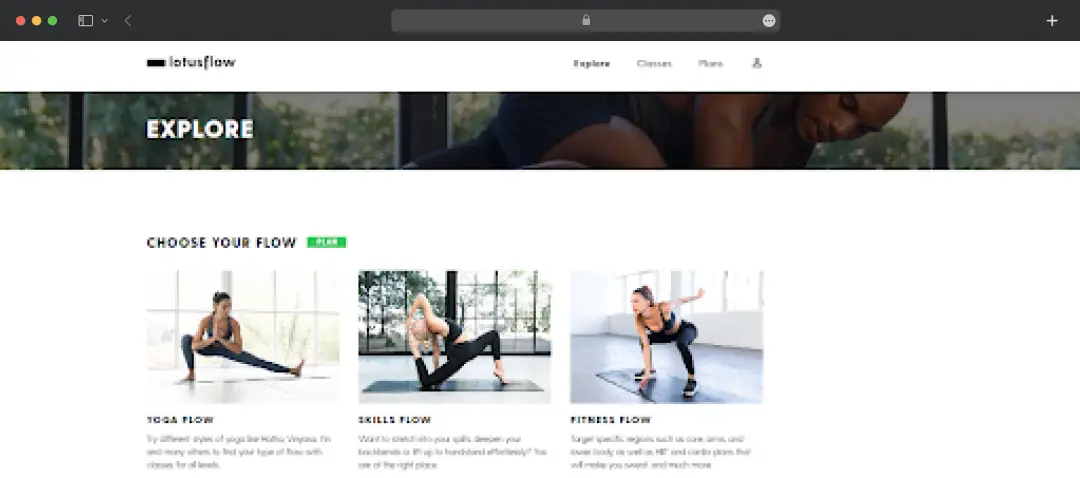
The class library is where Lotus Flow earns most of its appeal. Instead of one long list of videos, classes are grouped into four clear categories: yoga, fitness, skills, and mindfulness.
That makes it easier to find what suits your mood and energy, and the library is built for every level, from first-timers to experienced practitioners. Here's what each category offers in the Lotus Flow app.
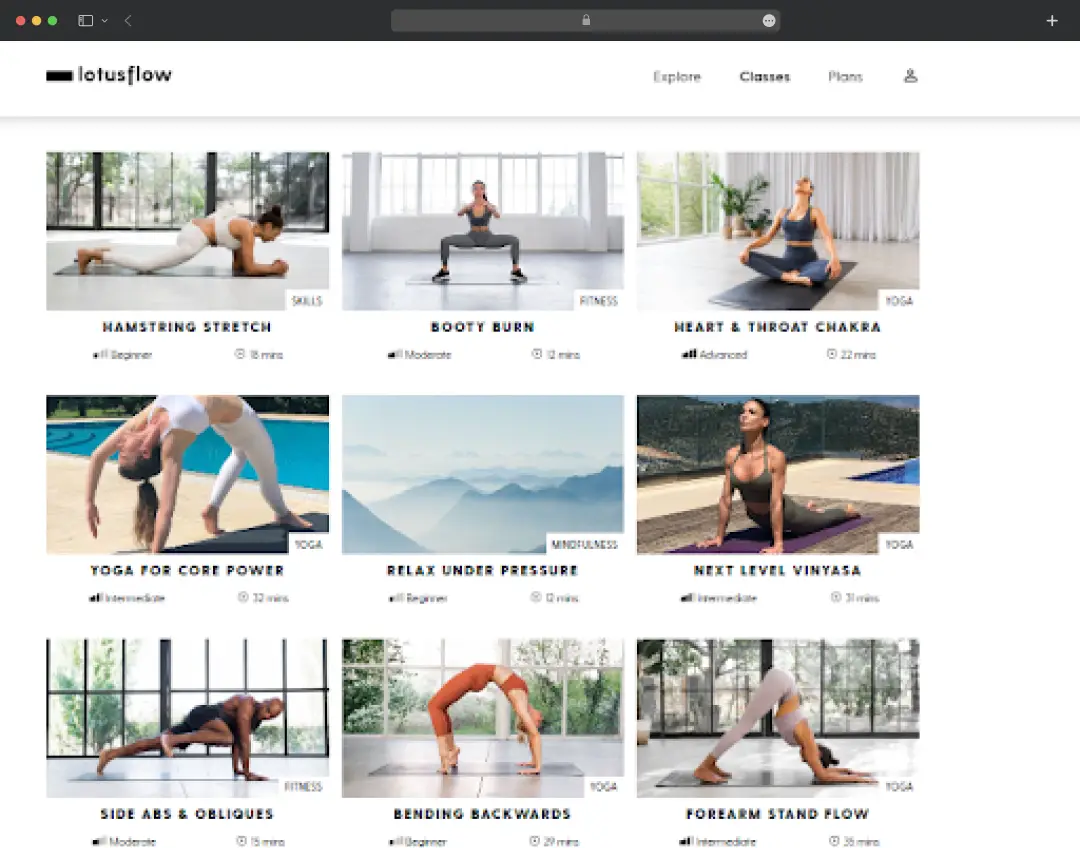
1. Yoga
This is the core of the library, with hundreds of classes prepared by world-class instructors. Whether you want a slow stretch or a more active flow, there's usually a yoga class that fits, and the range of levels means you can start gently and move up at your own pace. It's the category most people will open first.
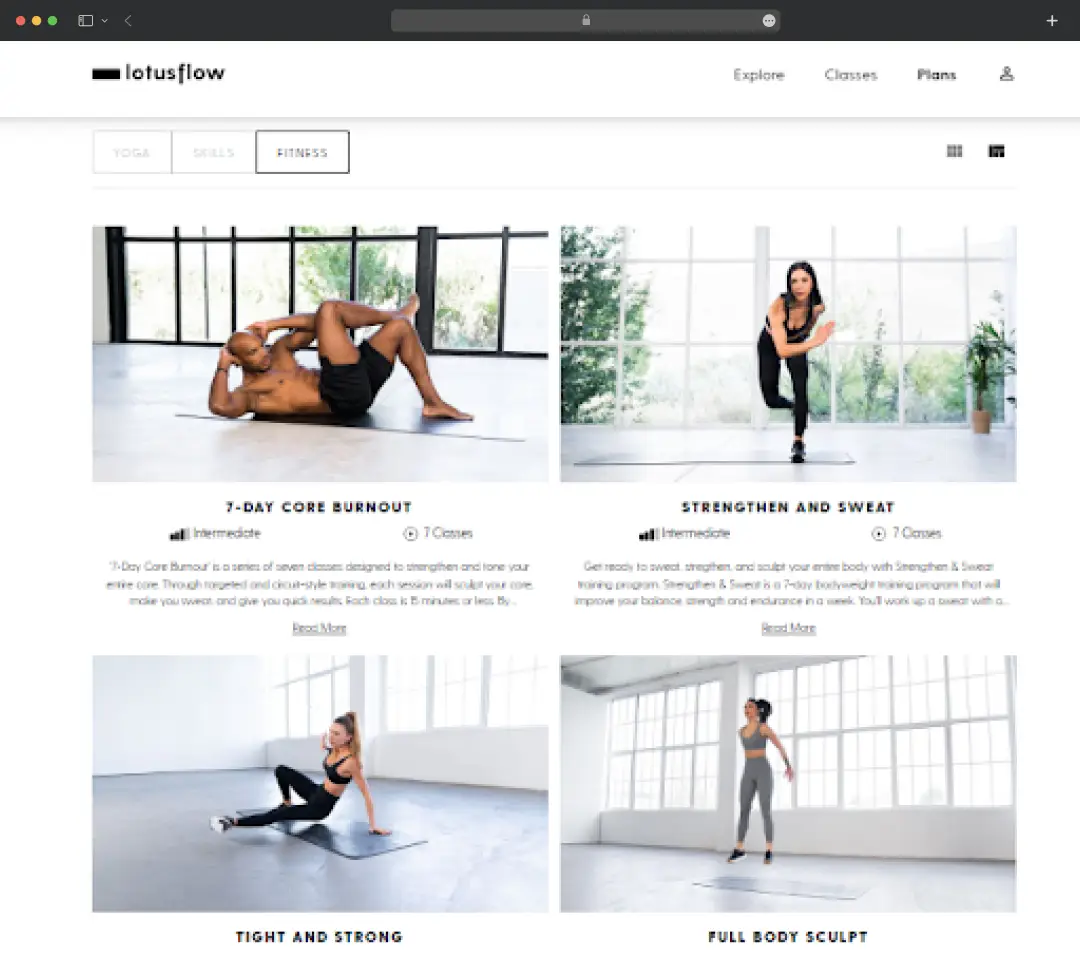
2. Fitness
These classes are led by professional instructors, each with their own approach to training. They add some variety to a routine that might otherwise be all yoga, and they suit days when you want to move a bit more actively. Since it all lives in the same fitness app, there's no need to switch platforms for a change of pace.
3. Skills
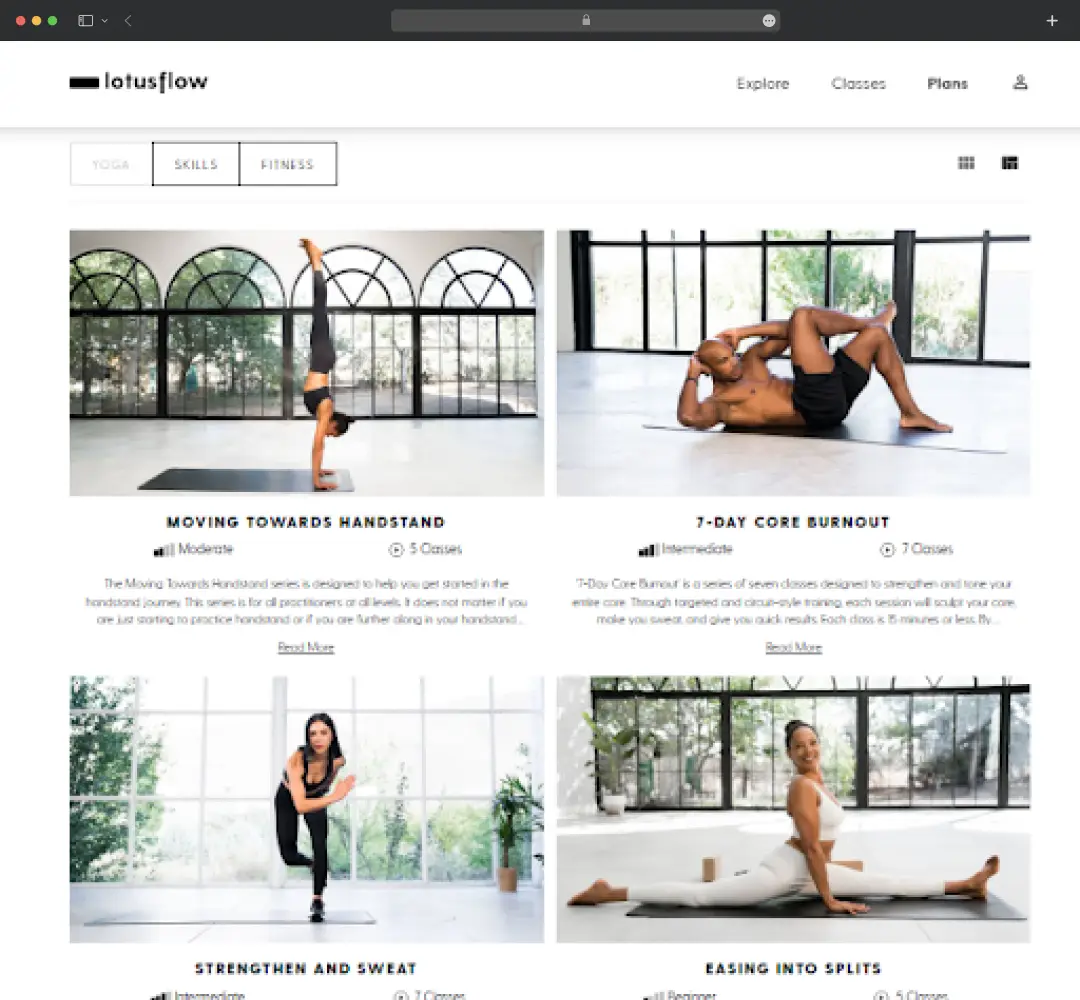
This category is for anyone working toward something specific, such as handstands, splits, or other techniques. Classes here break skills into manageable parts, so you can build toward a goal gradually rather than guessing how to progress. It's a good pick if you like having a clear target to practice toward.
4. Mindfulness
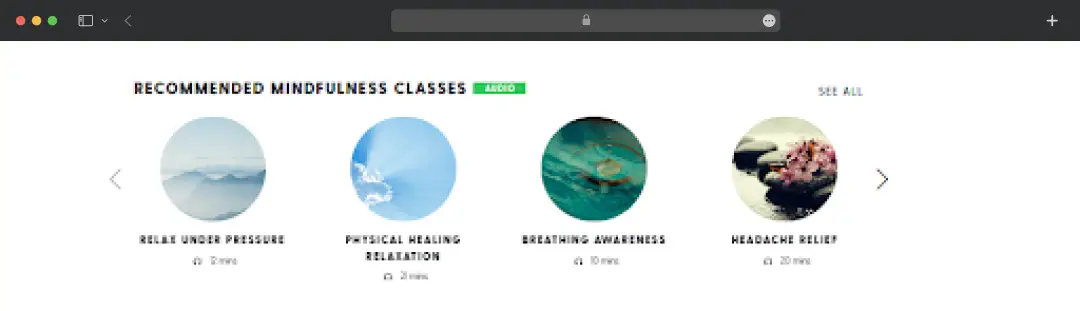
The mindfulness sessions focus on relaxation and slowing down, and the library includes dozens of them. They work well after a workout or on a stressful day, and they sit in the same app as your movement classes. It's not a dedicated meditation platform, but it covers the basics for building calm into a routine.
Beyond these four categories, the app also includes gentler formats like chair yoga, wall pilates, face yoga, and tai chi, which makes the overall library broad enough to keep a home routine interesting.
Who is Lotus Flow Suitable For?
Lotus Flow app is built for people who want to stay active without the pressure of a gym or a high-intensity plan.
Its mix of yoga, Pilates, tai chi, and mindfulness suits a wide range of lifestyles and fitness levels. Here's a look at who gets the most out of the Lotus Flow app and why.
| Persona | How Lotus Flow Helps |
|---|---|
| Women 40+ | Low-impact classes cover flexibility, mobility, and steady strength work. Sessions are short enough to fit around work and family, which makes a routine easier to keep up. |
| Beginners starting their wellness journey | There are no intimidating gym floors or complicated plans. Beginner-friendly classes introduce the basics at a gentle pace, and difficulty builds gradually as you get comfortable. |
| Yoga and Pilates enthusiasts | Guided classes and structured programs make regular practice at home simple. With yoga, Pilates, and Wall Pilates under one roof, there's enough variety to keep a routine interesting. |
| Busy professionals | Short sessions slot into a packed day, whether that's a ten-minute stretch before work or a calming session in the evening. Mindfulness practices sit alongside the movement classes, so you can unwind in the same app. |
| Active aging audience | Chair yoga and mobility-focused classes support balance, posture, and flexibility through gentle, joint-friendly movement. It's an accessible way to keep moving regularly. |
| Tai chi and mindful movement enthusiasts | Tai chi and slow, deliberate classes focus on balance, coordination, and concentration. They suit anyone who prefers calm, controlled movement over fast workouts. |
| Stress and wellness seekers | Guided mindfulness and relaxation sessions help build a calmer daily routine. Pairing them with light movement makes healthier habits easier to stick with. |
| Home fitness users | No gym membership, studio schedule, or equipment is needed. Everything works from a bit of floor space, which makes it a practical pick if you want the best home workout app for everyday use. |
Also Read: Best Fitness Apps for Women
Customer Reviews
How was your experience with the product?